Very happy and excited to share some superb sounds for Halloween. Put them in your ears and turn them up loud...
Firstly the superb Heartwood Institute and their magnificent "Witch Phase Four..."
Follow this with the brilliant Triffid Witch from the Ephemeral Man...
When you have recovered from the stings of the Triffids and the spells of the Love Witch turn you ears to the wonderful work of Melmoth the Wanderer as you the strange feeling that "There's someone else in the room..."
As you party begins tune into the aural delights of Phantom Circuit...
After that explore the magnificence of a Folk Horror Halloween with this mix from GASP...
Top it off with fantastic all vinyl live Halloween mix from The Trip.
When you have doen all that reflect on the montha dn relax with the unnerving October mix from Wyrd Kalendar...

Sunday, 29 October 2017

Sunday, 22 May 2016
A Rest Before the Walk - Keith Seatman - Review
 |
| Click to listen/buy. |
And so I rest before my walk. I put Keith Seatman's new album into the player and begin my ritual. I know it will be good for me. I have been Around the Folly and Downhill.
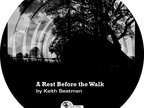
1. We all had our dreams. Keith Seatman seems utterly adept at capturing them in the laser grooves of the compact disc. The distorted stretched bells and terrifying backwards sounds combine throwing me beyond the black lodge and into nightmare.
2. These Strange Tales and Lost Paper Trails indicate that Keith Seatman is, as I have long suspected, the love-child of Delia Derbyshire and John Carpenter. The wonderful panic stricken keyboard loops mingled with swooping low whistles and metallic gongs out-halloween Halloween. I am scared to go outside now.
3. But There's something outside, someone whispering in the glowing feedback. A voice telling me that something is outside. The music is building. Sounds moving left and right. I am terrified.
4. Once more with the whirligig. That will be fun. A whirligig is fun. Huge beats and metallic loops combine with a beautiful xylophone. A spell is cast - I am thrown into the whirligig. "Never no more will we dance will we sing in a whirligig ring to the old woman's tune on a bucket with a spoon in the moonlight on mondays." I am caught up in a ritual of Seatman's choosing. I cannot turn off. Must not turn off.
5. One of the Broken Folk Douglas E. Powell tells me that an Empire is falling. His soft voice resurrecting the ghost of John Foxx appears reassuring but there is a deeply sinister edge to this song. We sing and dance in the dark. What are we trying to hide? Where have the Broken folk gone? They are standing behind me as I listen.
6. An ancient voice from the past rides on a wave of throbs and cracks Made by Sun and Ice.
7. If I was out and about I would Race you to the top but I am running on the spot, my heart thumping backwards. My legs flying behind me. The drum calls me on but I am lagging, pulled back by the forces I cannot see. Everyone overtakes. The mist swirls. The dark board wobbles. I float to the top but not on my own steam. Something has allowed me to rise. The view is obscured by the deepest mist. The moon rises. I drift on the wind. Frequencies from the ether call to me. Try to bring me down. I drift on the wind.
8. "Watch your step!" I fall to earth with a bump. I am forced into a mechanical ritual of Thinking, Doing and Moving. Angry notes make me dance against my will. "Look before you leap" chant the invisible children. I will not sleep tonight.
9. I should have done My Morning Ritual. The beautiful voice of Douglas E Powell suggests what could be done. I could be dancing barefoot on the kitchen floor, dancing in the meadow. He tries to entrance me. He succeeds. I am happy right here right now. But should I be? For they tell me that's the way that it is. I spin myself so dizzy for a while.
10. I wish I wish I wish all musical experiences could be like this one. I am being taken to so many places on my rest before the walk. The enormous joyous beats transport me to an idyllic 1980s that is better than I remember - before drifting on strange frequencies into cosmic horror
11. The beautiful sound of birds and train distort under the thrust and push of the machine. I am Waiting for Mr Fieldpole. The landscape distorts as he approaches, his head tilted to one side, hat askew, his feet tramp against the ground, louder than any step I have heard. He smiles at me. His teeth sharp and glinting. His eyes a dark purple.
This ritual is opening doors to things I do not understand.
12. Maybe she can help. She holds the sun in her hand. But she stands next to Mr Fieldpole. He defers to her. The electronic beeps and calls only increase my anxiety.
13. I should be reassured as I move Along the Corridor 1st on the Left Room 2882 but the terror increases. As this soundtrack of imagined horror grows. The assured synth rhythms and loops collapsing into low swoops. A phone rings. Answer the phone. Who is calling? Who is in 2882? Why do I need to go there. Answer the phone. Answer the phone. Answer the phone. Who is coming down the corridor?
14. I was told that I would need a Rest Before the Walk. But I am exhausted now. My heart is racing. What is it? It would appear I have walked in circles. I shake the bones in my bag. Cast them on the floor. The shape they land in gives me no comfort. I am trapped in a delicious hell of Keith Seatman's making. It would appear I have come full circle. But I haven't moved. I have been sitting, headphones on, lost in this electronic ritual.
The Ritual does not end.
I begin again.
I loop.
Lost in Keith Seatman's electronic dreams.
Saturday, 21 May 2016
The Footbook of Zombie Walking - Phil Smith - Review
Phil Smith
Triarchy Press

Phil Smith (aka Crab Man) used to walk sideways. Now he
stumbles, shambles and groans.
In his fantastic book Counter-Tourism:The Handbook he encourages us to see the world in a new way, to re-view the
familiar through our own mischief, to play with established sites, to usurp the
rules set by the heritage industry and question the geographic and historic
hegemony. He enables us to recognise that history and our expectations of
landscape are a construct and that we would have much more fun if we fabricated
our own. Above all Phil Smith encourages us to play again, (in the case of some
atrophied readers he may be encouraging us to play for the first time) to rip
up our guide books and write a new narrative over the landscape.
He encourages us to slip into liminal spaces, explore
boundaries, discover that the most interesting places are often the least
visited. In his dérives he has uncovered ways of enjoying the world anew.
There is something distinctly spiritual about his books.
Phil Smith encourages us to re-engage with an environment we mostly ignore.
Since reading Counter Tourism and On Walking I often find myself
contemplating the pleasures of getting lost. Leaving the path or the motorway
and exploring unknown spaces. I enjoy finding out facts and folklore about
unfamiliar locales and revel in lying about overly familiar places. These
experiences are akin to laying a transparency of magic over the landscape.
With his new book The Footbook of Zombie Walking his approach has evolved further. The journey
through the landscape is explored through the myth and tropes of the Zombie. But
rather than this being an exploration of elaborate Zombie role play (which I
was expecting) it becomes something far more eye-opening, spiritual and
ultimately moving.
The book uses a structure that those of us familiar with
Phil Smith’s work will recognise: observation, italicised records of
discoveries, suggestions for exercises to enhance your dérives and academic cross-referencing
between discoveries on the walk and his own extensive knowledge. However, owing
to the focus of the book being on the Zombie, it delves into very strange and
enlightening territory.
For some, Zombie movies are revolting excesses of gore and
violence, they appear repetitive and often cheap, they revel in death and
decay, and they celebrate the post-apocalyptic life. For others the films
appeal for the exact same reasons. The Zombie film is about rebirth. The
rebirth of the landscape, the body and the mind. It is this notion of starting
again - of our overly familiar environment becoming a brand new place of unexpected
possibility – of our own minds and bodies being agents and vessels of this
change - that appeals to us.
Walking and Zombies might not seem well-matched bedfellows
but on reading this book I am surprised that this has not been covered before.
The majority of Zombie films contain more walking and landscape than Peter
Jackson’s Hobbit and Lord of the Rings trilogies combined. Zombies can only
walk and the survivors, with defunct technology all around them, are forced to
do the same. The Zombies see a world full of possibility and food and the
survivors see a ravaged shell, full of danger. Both parties are invigorated and
changed by the transformation of their world. Phil Smith enables us to see our
own world through these eyes.
I am a Zombie Apologist. (I have become recently acquainted
with the term “apologist” when I discovered that there is a sub-genre of
religious literature known as Christian Apologetics – these books are written to
appeal to non-Christians who view the violent excesses of religion with
suspicion. The Christian Apologist edits or re-interprets the nastier bits of
religion to make it more palatable to the liberal, anti-slavery, sexually
tolerant post millennials. It therefore seems an apt modifier to use next to “Zombie”.)
When speaking to those who think of
undead film and literature in the same way that I consider football (i.e. not
at all) I find myself avoiding the Zombie in my explanations. This is similar
to the way that football aficionados try to win me over with talk of atmosphere
and camaraderie to get me to watch a match whilst avoiding mention of the game
itself. I find myself talking of survival, metaphors and “It’s about family
really.” A classic defence of “The Walking Dead”, when met with “Hasn’t that
got Zombies in it?” is “Yeah, but it’s not really about Zombies.” The Zombie
cockerel has crowed three times. Not only does Phil Smith reveal this to be an
utterly cowardly riposte he also encourages us to embrace the Zombie in our
lives and perambulations. Phil Smith is less Zombie Apologist and more Zombie Evangelist.
Zombie films are about transformation. Primarily two things
are transformed: the body and the landscape. The book acts as a guide to how we
can engage with landscape, community and our own selves in a different way. The
Zombie’s shambling gait is a portal to new experiences and ways of seeing.
The Footbook of Zombie Walking revises our view of the
Zombie, but, strangely and movingly for such a fearful and stupid creature, it
allows the Zombie to guide us into a new way of living. This is Zen and the Art of Motorcycle Maintenance for the post-millennial generation – we can find
enlightenment through the Zombie in much the same way that Pirsig finds it
through embracing the mechanical.
This fascinating book does require some knowledge of Zombie
films due to the myriad references made throughout, I would suggest as primer
material that you read The Walking Dead graphic novels by Robert Kirkman, and
The Road by Cormac McCarthy. Watch Night of the Living Dead (both the original
and the 90’s remake), Dawn of the Dead (both versions), Day of the Dead (the
original), Les Revenants, Shaun of the Dead and see where that takes you.
Embrace your inner Zombie and see the world anew.
Seek it out. Consume. Stumble. Groan. See the familiar as
though it is new.
Friday, 1 January 2016
Take a trip down The Delaware Road
And we begin...
Reading Town Centre - A dark damp Saturday in November
The fireworks are exploding around me in time with the mundane tunes of the now.
I push past the gawping hordes looking out at the Oracle, illuminated by exploding gunpowder expense in this empty ritual to vacuity and excess.
South Street Arts Centre calls.
Warm red brick.
The old Labour Exchange playing host to ghosts of an imagined past.
The launch of The Delaware Road.
 |
| These are not your eyes. |
He sits at a table.
Face furrowed in concentration.
This is how it happened.
The lights dim.
Words weave.
Tongue and teeth.
Spit and fury.
Magic and drama.
Poetry and song.
Tape and video.
Valve, magnet, beep, button, loop, moog.
Sine waves. Liminal waves. Waves of half remembered nostalgia.
We are dragged under the waves into the deep, into and down the Delaware Road.
This unique event was a mesmerizing mix of film, music and poetry. A piece of ritual that at times captured the essence of the UFO gigs with the psychedelic oil projections, dry ice and beautifully weird music.
 |
| Surrounded by Smarties they flew their ship onward. |
The album that this ritual launched has been in constant use in my house since the gig. Calling up the electric spirits of the 70's, moving me from synthesised ecstasy to mystic knowing to utter joy with each track.The Delaware Road is the brainchild of Alan Gubby, the curator of Buried Treasure, a relatively new but achingly successful record label based in Berkshire.
 |
| Hold, hold bare up thy rapture. |
The album straddles various genres but is held together by a sense of displaced nostalgia. The title itself is unsettlingly familiar. The Delaware Road, I have been there, I know it.

 |
| After several attempts Loose Capacitor make the line go wiggly. |
At various stops on the Delaware Road we visit the world of synthesisers, loops and electronica - from the beauty of The Twelve Hour Foundation with Hundreds Twelves and Units; the aural poetry of Ian Helliwell's Water Gardens (his manipulation of ancient sound boxes was a joy to watch); the unsettling joy of Trouble and Strife's The Shag (an instrumental paean to the glories of the thump of glam rock); the electric 80's film noir of Robin LeeAsterion's Que; the freakish mix of sweet loops and demonic possessions in Monoslapper's Twit to the toe-tapping brilliance of Loose Capacitor with their superb "Theme to Robins Nest".
 |
| A watcher in the darkness. |
 |
| Some people are able to pronounce Revbjelde. I am not one of them. |
 |
| Hat. |
Joining the haunting sounds of Revbjelde is the sublime Howlround's Cradle Cheat (with their tape hanging all over the shop). We are also joined by the wonderful Dandelion Set who deliver music that matches their clothes (see above).
 |
| The man with long hair escaped the screen four minutes and thirty seven seconds after this picture was taken. |
The other houses on the Delware Road are populated by Folk Horror - the Rowan Amber Mill's Buzzard and the Nightingale is a haunting piece of music with harp and vocal used to conjure a dream of mist and heather, whilst the brass of Tongues of Fire is the sort of thing that wouldn't be out of place on the narrow streets of Summerisle.
I will never forget this gig.
It was eye and ear opening.
The album is a joy.
Delaware Road is a place I will be visiting again and again.
Buy it!
Tuesday, 30 December 2014
Eastgreen - Working the Night Shift - Review
Allow me to introdce you to Eastgreen.
If you haven't discovered the sound of 2015 yet, then "Working the Night Shift" is the right place to start.
His follow up to his first promising album "Take Two" is an exemplary piece of urban hip-hop.
"Working the Night Shift" is an enlightening and intelligent look into the head of a fiercely clever 16 year old poet. From the rain-soaked title track we are drawn into the dream and waking world of Oli "Eastgreen" Cox; his overactive synapses firing us between the heartache of the beautiful "Missing You", to the frustration of "Gangsta", via the snarky joy of youthful inebriation in "I don't know my name", before smashing us into the nightmare of "Dark Mirrors". It is by turns joyously parochial "Welcome to Reading", deliciously mundane "Cravings" and mischeviously saucy and gloriously juvenile "My Clock". Eastgreen also reveals a beautifully British sense of self-deprecation (most notably in "50 Shades of Green" and "I Don't know my Name") that bursts the posturing and groin thrusting bubble that we associate with the world of rap. There is a wonderful use of soundscape and sound effects throughout the album that make this more than just a series of songs, this is an immersive and exciting journey that goes beyond all expectation.
Eastgreen is also happy to collaborate with some other exciting artists who he clearly respects and gives equal voice to. The duets with fellow spoken word artists Esa Kwame ("Welcome to Reading" and "Charlie"), Shock ("Gangsta") and Finker ("Instead I'll Sing") are beautifully realised and they fit perfectly into his vibrant and fractured world. A litte bird has told me that there are some huge collaborations coming this year and it appears that this album is rattling all of the right doors.
So check it out.
Join Eastgreen on his nightshift and let's see where this journey takes us.
If you haven't discovered the sound of 2015 yet, then "Working the Night Shift" is the right place to start.
His follow up to his first promising album "Take Two" is an exemplary piece of urban hip-hop.
"Working the Night Shift" is an enlightening and intelligent look into the head of a fiercely clever 16 year old poet. From the rain-soaked title track we are drawn into the dream and waking world of Oli "Eastgreen" Cox; his overactive synapses firing us between the heartache of the beautiful "Missing You", to the frustration of "Gangsta", via the snarky joy of youthful inebriation in "I don't know my name", before smashing us into the nightmare of "Dark Mirrors". It is by turns joyously parochial "Welcome to Reading", deliciously mundane "Cravings" and mischeviously saucy and gloriously juvenile "My Clock". Eastgreen also reveals a beautifully British sense of self-deprecation (most notably in "50 Shades of Green" and "I Don't know my Name") that bursts the posturing and groin thrusting bubble that we associate with the world of rap. There is a wonderful use of soundscape and sound effects throughout the album that make this more than just a series of songs, this is an immersive and exciting journey that goes beyond all expectation.
Eastgreen is also happy to collaborate with some other exciting artists who he clearly respects and gives equal voice to. The duets with fellow spoken word artists Esa Kwame ("Welcome to Reading" and "Charlie"), Shock ("Gangsta") and Finker ("Instead I'll Sing") are beautifully realised and they fit perfectly into his vibrant and fractured world. A litte bird has told me that there are some huge collaborations coming this year and it appears that this album is rattling all of the right doors.
So check it out.
Join Eastgreen on his nightshift and let's see where this journey takes us.
Tuesday, 28 October 2014
A Selection of Halloween Mixes by superb mixers and artists - Part 1
This is my favourite time of year.
Here are a few fantastic mixes for you to enjoy that have been created for Halloween 2014.
The first is this brilliant mix by The Ephemeral Man.
Then we have this new discovery by Songs of Silver. Love this. A fantastic mix that will definitely be accompanying my pumpkin carving on Friday.
Happy Halloween!
Friday, 24 October 2014
Black Meadow: Black Meadow in Shindig! (Issue 43)
Black Meadow: Black Meadow in Shindig! (Issue 43): This month in groovetastic magazine Shindig you will find an interview with Black Meadow curator Chris Lambert about the ongoing Black ...
Subscribe to:
Posts (Atom)